On this page16 sections
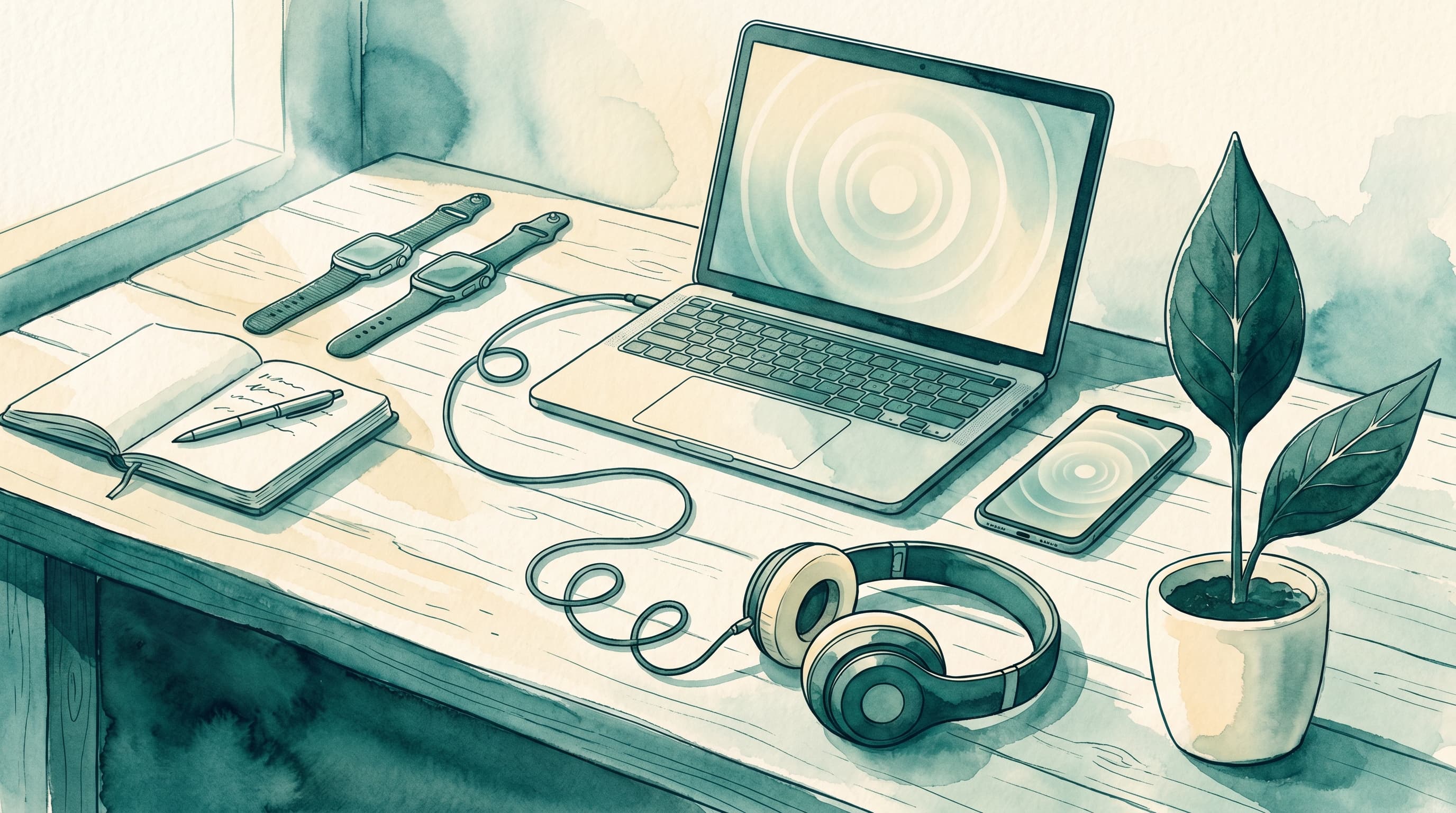
Bilateral stimulation has moved from purely clinical settings into consumer apps. People are using BLS to wind down at night, settle anxious thoughts, and reduce day-to-day stress, with apps available in 2026 covering a useful range of approaches.
This guide compares the bilateral stimulation apps that are genuinely BLS-first, with verified features, pricing, and platform coverage. If you're a therapist looking for clinical tools rather than a personal app, see our companion guide on the best EMDR apps for therapists.
A quick note before we go further. BLS for calming and self-regulation is widely accepted as a self-care practice, in the same general category as breathwork or guided meditation. EMDR therapy is something different: it's the structured 8-phase clinical protocol that uses BLS as one of its components, and it requires a licensed therapist. This guide covers BLS as a self-care tool, not EMDR therapy.
What is bilateral stimulation, briefly
Bilateral stimulation (BLS) is any form of alternating sensory input: left side, right side, left side, right side. The three modalities are visual (your eyes following a moving object), audio (alternating tones in your ears), and tactile or haptic (vibrations or taps that alternate between sides).
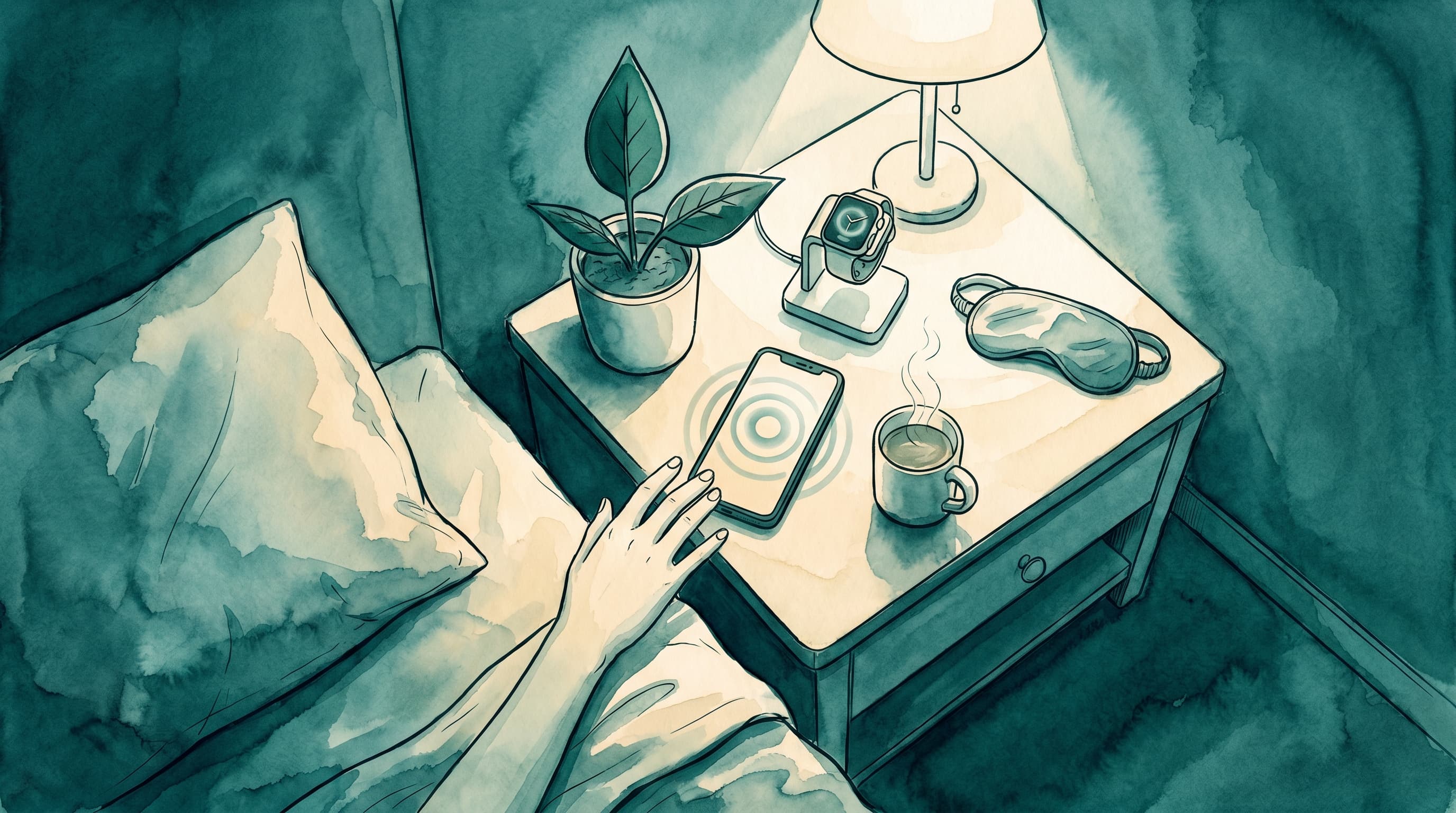
BLS originated as part of EMDR therapy, but the same alternating input has come into use as a standalone calming and grounding technique outside of clinical sessions. People use it before bed to help wind down, during stressful moments to settle their nervous system, or as part of a broader meditation or self-regulation practice.
For a fuller explanation of how BLS works, see our guide on how bilateral stimulation works in EMDR therapy.
Who this guide is for (and who it isn't)
This guide is written for individuals who want to use a BLS app as a self-care tool. That includes:
- People exploring BLS for sleep, anxiety, or stress
- People in therapy who want a tool for between sessions
- People curious about EMDR-style techniques as part of their own self-regulation practice
It is not written for, and BLS apps are not a substitute for:
- Working through trauma on your own without clinical support
- People with active PTSD or trauma symptoms who haven't talked to a professional
- People in crisis
If you're working through trauma or a clinical condition, a licensed therapist is the right next step. The apps in this guide can be helpful as self-care tools, between-session practice, or part of a broader practice, but they're not designed to replace clinical care.
Is it safe to use BLS on my own?
For the use cases this guide focuses on (calming, sleep, stress, grounding), BLS on its own is generally considered a low-risk self-care practice. Slow, gentle bilateral input paired with a neutral or positive focus is the kind of self-regulation work that Francine Shapiro, who developed EMDR, wrote about in her book Getting Past Your Past, where she adapted preparation-phase techniques from EMDR for everyday use.
The line where caution matters is trauma processing. EMDR therapy works through specific memories with a trained therapist guiding the process. Doing that kind of work alone, without clinical structure or someone to help you regulate if difficult material comes up, is outside the scope of what any consumer app can safely support.
Practical guidance:
- Use BLS for calming, grounding, and resource-building (safe-place visualization, positive memories, settling before sleep). Most people find these uses low-risk and helpful.
- If a session brings up emotions or memories that feel overwhelming, pause. Take a break, ground yourself in the present (notice 5 things you can see, hear, and feel), and consider talking to a therapist.
- If you're working with a therapist, ask which uses of an app are appropriate for your situation between sessions.
A BLS app can support good mental health practices. It is not a clinical intervention.
What to look for in a bilateral stimulation app
The criteria that matter most when picking a BLS app for personal use:
- BLS modalities offered: Does the app support visual, audio, and tactile BLS, or only one? No single type is clearly better than the others (studies that compare them find similar results), so having all three mostly gives you flexibility to pick what feels best in the moment.
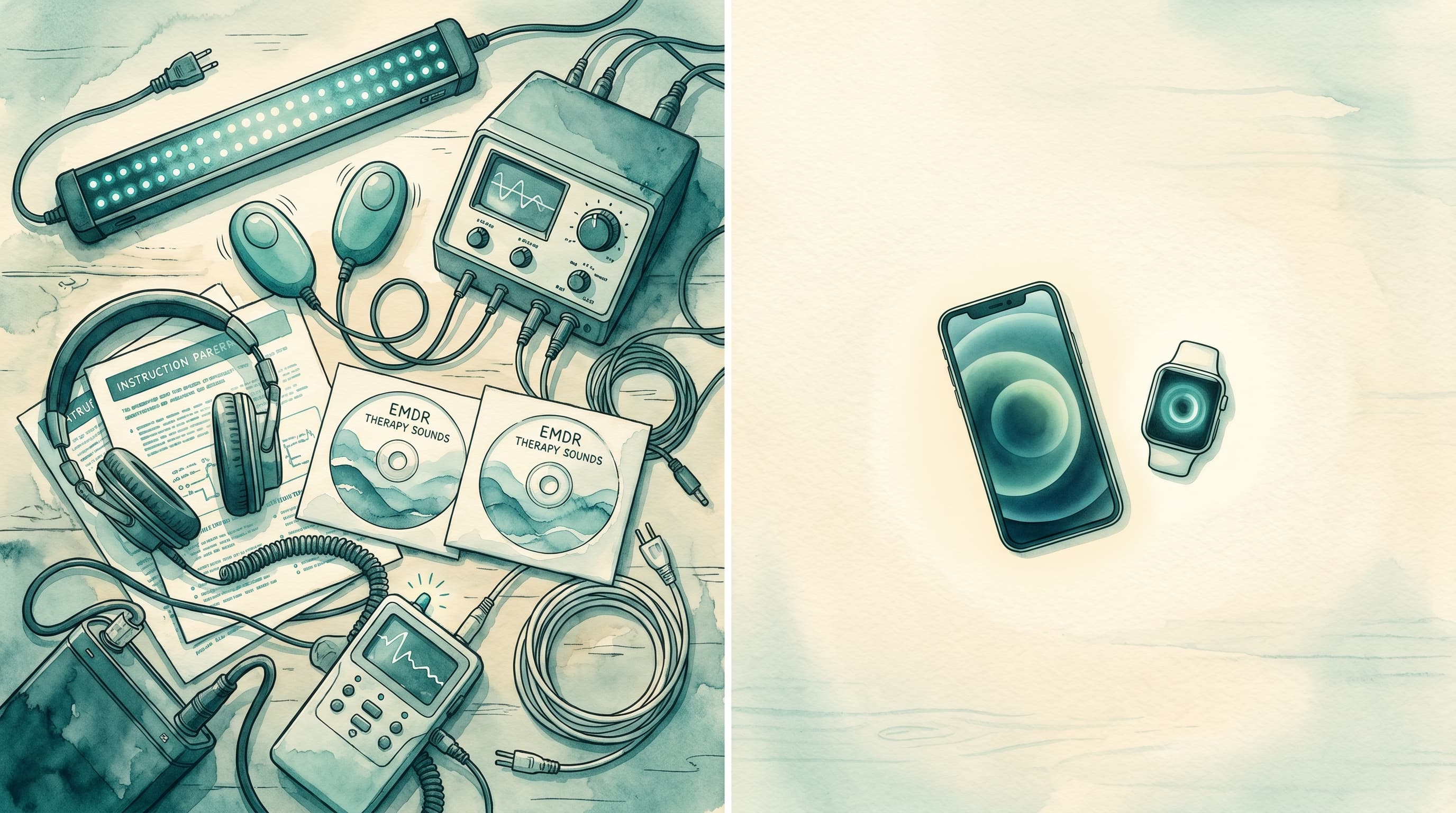
- How tactile BLS is delivered: Some apps deliver tactile through your phone's vibration or your smartwatch. Others require buying a separate piece of hardware.
- Free tier vs paid: Some apps are free at the core, some are one-time purchases, some are subscriptions. Match the pricing to how often you expect to use the app.
- Platforms: iOS, Android, web, smartwatch. Native mobile apps usually give a smoother experience than browser-only tools, especially for haptic delivery.
- Privacy and compliance: BLS apps generally don't need much personal data, but check the privacy policy if you're using one alongside personal mental health work.
App comparison
| App | Modalities | Tactile without extra hardware | Free tier | Platforms |
|---|---|---|---|---|
| EMDR Tappers | Visual, audio, tactile | Yes (phone + Apple Watch) | All modalities free | iOS, Android, web, Apple Watch |
| Heal EMDR | Visual, audio | No tactile feature | 7-day trial, then $14.99/month | iOS, Android |
| EMDR (Bas Oppenheim) | Visual, audio, tactile | Yes (built-in device haptics) | 1-month trial, then $39.99/month or $199.99/year | iOS, iPad, Mac, Apple Watch, Apple Vision Pro |
| Sleep Restore | Audio | No tactile feature | 6 free sessions; $7.99 in-app unlock | iOS, Android |
| bilateralstimulation.io | Visual, audio, tactile | No (buzzers required for tactile) | Visual and audio free | Web only |
| Anxiety Release Based on EMDR | Audio | No tactile feature | $4.99 one-time | iOS, Android |
| BilateralBase | Visual, audio, tactile | No (Tactile Tappers required) | Paid (consumer pricing not publicly listed) | Web only |
Features and pricing were verified against each vendor's website in April 2026. Check each vendor's site for current information, since features and pricing change.
Detailed app summaries
EMDR Tappers
EMDR Tappers is a BLS-first app designed to deliver visual, audio, and tactile bilateral stimulation through the devices you already own. Tactile BLS works through phone vibration or Apple Watch haptics, without any separate hardware to buy. The free tier covers all three modalities. Premium plans add session history, additional customization, and a growing library of guided sessions. The platform is HIPAA-compliant.
The app is available on iOS, Android, web, and as a native Apple Watch app, which makes it the only platform in this comparison with that combination of reach. The current App Store listing has 1,500 ratings at 4.8 stars, the largest verified rating count among the BLS-first apps in this guide. A newer version, EMDR Tappers 2, is also available with updated features, and is the recommended download for new users.
Hardware required: No. Visual BLS displays on the screen, audio plays through speaker or headphones, and tactile BLS uses built-in phone vibration or Apple Watch haptics.
Best for: Anyone who wants BLS without extra hardware or paywalls: all three modalities, free, across iOS, Android, web, and Apple Watch.
Heal EMDR
Heal EMDR is a self-guided EMDR-style app for individuals rather than therapist-led sessions. It supports visual and audio BLS within a structured session framework with AI guidance. Headphones are recommended for the audio BLS to be effective. Pricing is $14.99 per month after a 7-day free trial. Available on iOS and Android (4.84 stars on iOS, 4.3 on Google Play).
Hardware required: No. BLS is delivered through the phone screen and audio (headphones recommended).
Best for: People looking for a paid subscription app with AI-led session prompts.
EMDR (by Bas Oppenheim)
EMDR is a general-purpose bilateral stimulation tool with a minimalist design. It supports visual, audio, and tactile modalities, and can pair with a second device or Bluetooth controller in the same room for synchronized stimulation. An optional EMDR+ Connect feature also enables therapist-led sessions over a shared link. The app runs across Apple devices (iPhone, iPad, Mac, Apple Watch, Apple Vision Pro) but does not support Android. Pricing is $39.99 per month or $199.99 per year (one-month free trial). 4.4 stars on the US App Store.
Hardware required: No. Tactile uses the device's built-in haptics or an optional Bluetooth controller.
Best for: People in the Apple ecosystem who want a minimalist BLS tool and are comfortable with a higher subscription price.
Sleep Restore
Sleep Restore is a sleep-specific BLS app created by Australian clinical psychologist Dr. Mark Grant. The app combines audio bilateral stimulation with guided meditation and music in structured sessions designed for stress-related insomnia. The free version includes 6 core sessions; a $7.99 in-app purchase unlocks 10 additional sessions plus 6 "sleep hacks". Available on iOS and Android. 4.4 stars on the US App Store.
Hardware required: No. Audio BLS is delivered through the phone's speaker or headphones.
Best for: People looking for a sleep-only app with 6 free sessions and a $7.99 unlock for the full pack.
bilateralstimulation.io
bilateralstimulation.io is a browser-based BLS platform used primarily by therapists (the site reports over 35,000 on the platform), with a free consumer-accessible tier for visual and audio BLS. Tactile BLS requires purchasing the platform's buzzers, which plug into a laptop or desktop computer. No native mobile or smartwatch app.
Hardware required: For visual and audio: no, the browser tools are free. For tactile: yes, the platform's buzzers must be purchased separately and used with a laptop or desktop.
Best for: People who only need visual or audio BLS and primarily use a laptop or desktop browser.
Anxiety Release Based on EMDR
Anxiety Release Based on EMDR is an anxiety-focused app from the same creator as Sleep Restore (Dr. Mark Grant / Overcoming Pain). It offers 5 audio tracks: an introductory exercise, two guided focusing sessions with BLS, one BLS-only session, and a safe-place exercise. Audio only, no visual or tactile modalities. One-time $4.99 purchase, no subscription. Available on iOS and Android. 4.4 stars on the US App Store.
Hardware required: No. Audio BLS through the phone's speaker or headphones.
Best for: People who want an anxiety-focused audio BLS app at a one-time low cost.
BilateralBase
BilateralBase is a UK-based telehealth EMDR platform that supports visual, audio, and tactile BLS through a browser. The platform is HIPAA and GDPR compliant. It's primarily designed for therapist-led sessions over encrypted video; individuals can sign up, but the consumer flow without a therapist is unclear. Tactile BLS requires purchasing the platform's "Tactile Tappers" hardware.
Hardware required: For visual and audio: no. For tactile: yes, the platform's Tactile Tappers must be purchased separately.
Best for: People whose therapist already uses BilateralBase and who want continuity across sessions.
Which app should you choose?
The right fit depends on what you're trying to do.
If you primarily want better sleep: Sleep Restore is the sleep-focused option in this guide, with structured audio sessions purpose-built for stress-related insomnia (6 free sessions; $7.99 unlock for the full pack). EMDR Tappers does not include sleep-specific guided sessions, but if you've found that plain BLS audio or gentle haptic vibration helps you settle before sleep, the free tier supports that use directly, and the Apple Watch haptic option lets you keep your eyes closed.
If you primarily want to reduce anxiety: Anxiety Release Based on EMDR is the anxiety-focused option, a one-time $4.99 audio app with five short tracks including a safe-place exercise. EMDR Tappers is a more general alternative that supports anxiety use through regular BLS in the free tier, with subscription-based guided sessions and affirmations as additional options. Heal EMDR is another subscription option with AI-led session prompts.
If you primarily want to reduce everyday stress and find calm: EMDR Tappers is the most flexible free option, with visual, audio, and tactile BLS across phone, watch, and browser. bilateralstimulation.io works in a browser when you're at a computer, with visual and audio free.
If you want app-led guided sessions: Heal EMDR is built around AI-guided self-help sessions and is the structured-experience option in this comparison.
If you want a free tier across all three modalities: EMDR Tappers covers visual, audio, and phone or Watch haptic BLS in the free tier, with no hardware purchase needed. This is the only app in this comparison with that scope of free access.
If your therapist hasn't recommended a specific app: EMDR Tappers is a reasonable starting point. The app was designed by researchers, veterans, and licensed EMDR professionals, so it fits naturally into sessions if your therapist later wants to use it with you.
Frequently asked questions
Do these apps replace EMDR therapy?
No. EMDR therapy is a structured 8-phase clinical protocol that requires a licensed, trained therapist. BLS apps deliver one component of that protocol (the bilateral stimulation), which can be used on its own for calming, grounding, and self-regulation. They are not a substitute for working with a therapist on trauma, PTSD, or other clinical conditions.
How long should I use BLS at a time?
For self-regulation purposes, short sessions are usually enough. Many people use BLS for 5 to 15 minutes at a time, sometimes paired with breathing or a positive focus. There's no single correct duration; if you find a session is bringing up difficult material rather than settling you, pause and ground yourself in your surroundings.
Can I use BLS while doing other meditation or breathing practices?
Yes, and it pairs well. Gentle audio or haptic BLS as a background rhythm during breath-focused practice, body scan, or safe-place visualization is a natural combination that many people find calming.
Is there research backing BLS for sleep, anxiety, or stress on its own?
The research base for EMDR therapy in PTSD is strong. The research base for BLS used as a standalone self-regulation tool, outside of the full EMDR protocol, is emerging and less established. Some studies and clinical practice support using preparation-phase EMDR techniques for self-regulation, but specific outcome claims (cures anxiety, treats insomnia) are not established, and you should be skeptical of any app marketing that suggests otherwise.
Can I use a BLS app if I'm already using a meditation app like Calm or Balance?
Yes. The apps in this guide are BLS-first tools, which means they focus specifically on bilateral stimulation across multiple modalities. Meditation apps that include BLS features are convenient if you already use them, but they tend to offer BLS as one program among many rather than as a flexible BLS tool. The two approaches can coexist.
Where to start
If you're new to BLS and want a free way to try all three modalities (visual, audio, and tactile) without buying any hardware, EMDR Tappers is the simplest starting point. The free tier covers everything you'd need for calming, sleep, and stress use, and the app works across phone, browser, and Apple Watch.
The other apps in this guide each have their own focus, pricing, and platform constraints. Use the comparison table and the decision section above to find one that matches your specific need, and check the vendor sites for the most current pricing and features.
Whichever app you pick, use it gently, at a pace that feels good. If anything difficult comes up that you want help working through, talk to a licensed therapist.
This article is for educational purposes. Feature claims, scores, and pricing were verified against each vendor's website in April 2026 and may change. BLS for calming and self-regulation is generally considered a low-risk self-care practice, but it is not a substitute for clinical care. If you're working through trauma, anxiety, or any mental health condition, talk to a licensed therapist. This is not medical advice.